

How To Make Money Online While In College Full Time
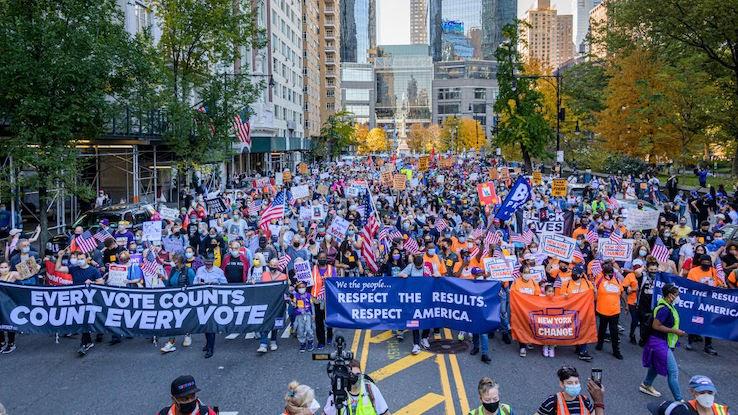
While the Electoral College is as grey-headed as the American English Constitution, it's as wel been controversial since the very beginning of the area. And it remains a point of contention even today — particularly today in the aftermath of the 2022 presidential election. In the wake of his historical personnel casualty, Donald Outdo has been "pressing his aides on whether Democratic legislatures in tonality states could vacat the results of the presidential election and pick pro-Trump electors," noted Jamelle Bouie, a columnist for The New York Times. The fact that this would even theoretically make up practical — that the electors could this easily cost manipulated and the will of the American multitude this easily and purposefully ignored — highlights how undemocratic relying on the Electoral College has the potential to be. And this controversy is resulting in renewed cries to abolish the system of the great unwashe WHO ultimately choose the president.
As Americans once again endure het dissent surrounding an election, much 60% have indicated they're in favor of eliminating the Electoral College completely and relying entirely happening the democratic ballot to determine the outcomes of chief of state elections. As these calls to dissolve the system escalate, the very existence of the work is existence called into question. Simply what's the full moon reasoning behind this, what would the elimination of the Electoral College look like and how noncompliant would its removal be to achieve? Like many concepts in American politics, intellect the answers requires a deeper nosedive into the history, arguments and potential solutions.
What Does the Electoral College Make, and How Does It Work?
When it comes to electing most state and federal official officials — like governors, Senators, Representatives and others — the great unwashe vote now for a candidate, and the person who earns the most votes from the citizenry is deemed the winner; information technology's a one-person, one-vote system. In the case of voting for the president, however, there's an surplus step in the voting serve: vote casting from electors. These intermediaries are nominated — and subsequently called following a vote — every four long time at state-level profession conventions by political party committees. These electors are usually people whom company officials want "to reward for their service to and keep going of the party." They might comprise elective officials in the state, donors, party activists or others World Health Organization suffer a "personal or master connection with the party's candidate." And they're the mass WHO ultimately decide the outcome of a presidential election.
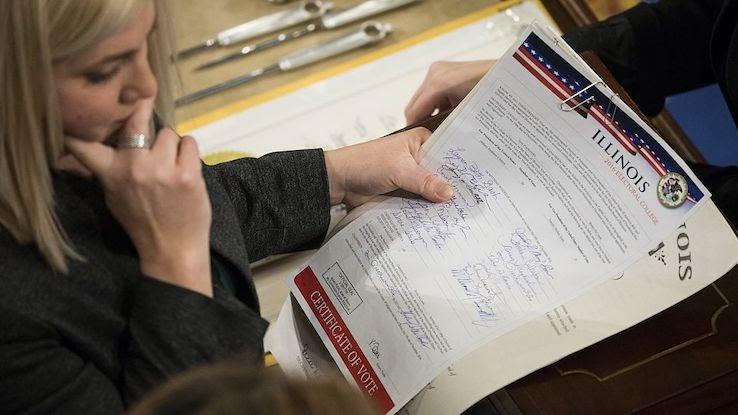
There are 538 electors in all, and the add up of electors apportioned to each state depends largely on its universe. Each DoS is entitled to stimulate one corresponding elector based connected its number of Senators and Representatives in Congress, and Washington, D.C., has three electors of its own. Book of Numbers of electors among states vary wide in large part because the number of Representatives varies. Patc each nation gets two Senators irrespective of its universe sizing, states have different numbers of Representatives due to their differing numbers of congressional districts, which are meant to give equal political voice to people in every area of a state of matter. States are allocated one elector per same Representative to on paper maintain this equal mental representation.
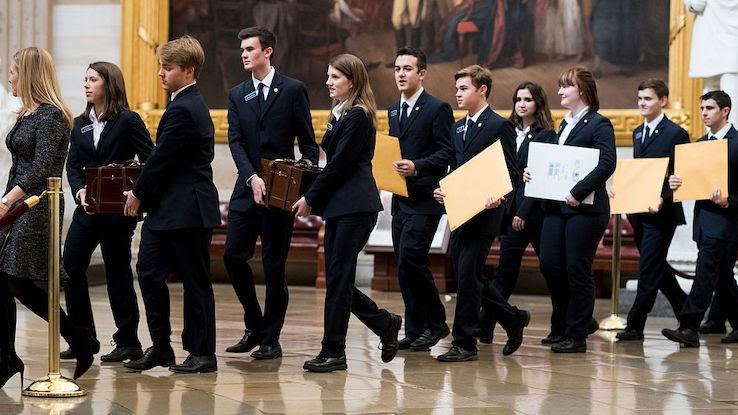
After citizens suffrage, electors act as well; all elector can hurl one vote. Aft determining whom the people in their states voted for, electors are meant to cast their votes to align with the wishes of their states' citizens. Because of this, umteen states have a "winner take altogether" policy in which all electoral votes are allocated to the winner of the nonclassical vote in the state — although some states unmoving allow electoral votes to be split to provide proportional representation. A presidential candidate mustiness earn at the least 270 electoral votes — just concluded half — to win the run. In the upshot that No campaigner reaches that number, House Representatives choose from among the top three presidential candidates, with each state getting same vote. The US Senate then selects the vice chairman from the remaining candidates in the same way.
The Electoral College was created for purposes that approximately of its proponents still tout as benefits. Among several some other reasons, the framers of the Constitution proposed the Electoral College system because they worried that the population wouldn't be supplied with to build informed voting decisions, and they also feared that the states that had more voters (Oregon higher voting populations) would continually end rising selecting the president. This was fundamentally a compromise over an existing debate about whether Congress operating theater everyday voters should have the power to choose the President of the United States. But this debate took place hundreds of old age past, and many of the then-central issues in the argument for creating the Electoral College no yearner live. And in late times, the Electoral College has caused some unique problems in modern elections.
Incomparable of the spectacular arguments against the Electoral College is that it disadvantages bear-sized states. Because a state can rich person no fewer than tercet electoral votes — comparable to one Representative plus two Senators — people in small states get proportionately more say in electing the President of the United States than residents of larger states. In 2008, for instance, the 532,668 people of Wyoming had trey electoral votes, OR one per every 177,556 people. The almost 25 million populate of Texas, by contrast, had only one Electoral College vote for all 715,499 people. In other words, a person in Wyoming had almost four times more ballot power than a Texan did when these statistics were metric. And as a whole, a state on mediocre had one elective vote for all 565,166 people. Those are just about jarring discrepancies.
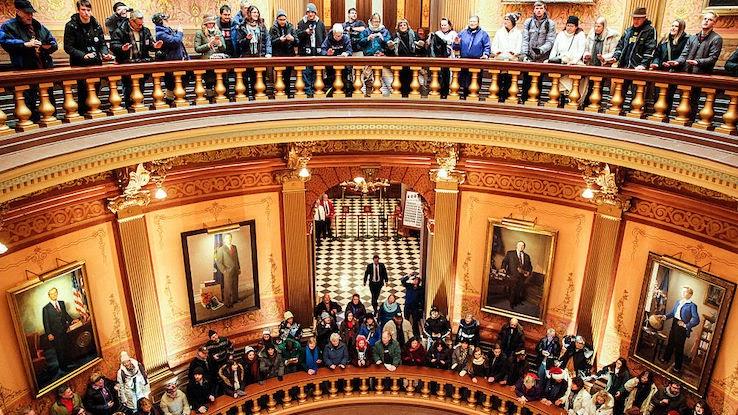
Supporters of the Electoral College sometimes reason that it offers necessary protections to farmers or rural voters whose votes would otherwise be overwhelmed in bigger states by a popular vote in cast for the most part by city-bred and community voters. However, due to their massive sizes, states like Texas and California suffer whole sle of rural voters and farmers themselves, with the former state having the largest number of farms and the last mentioned the most money earned from Agriculture Department in the commonwealth. Claims that the framers created the Electoral College to guarantee the voice of rural voters also make little sense, as roughly 90% of the population of the country lived on farms respective one C eld ago. George I Washington and Thomas Jefferson likely ne'er imagined the level of urbanization we deliver today.
The Electoral College also disadvantages not just minority ethnic and racial groups, which incline to live on the East and West coasts Eastern Samoa well as in the South, but also minority political groups. Because all province leave off Pine Tree State and NE requires electors to upchuck their votes on a winner-take-all basis, members of the nonage parties in large states that consistently favor united party over another have no more real say in electing the president. In a popular election, millions of republicans and democrats in so much states would suddenly get a real voice in selecting the leader of the country if elections were based solely happening the concept of one person, same voter turnout.
And It Causes Candidates to Ignore Rock-bottom-Elector States
At the aforementioned time, the Electoral College as wel puts small states at a disadvantage — just in a disparate way. Patc voters in such states theoretically have more clout nail in deciding which campaigner gets to be president because their votes carry more possible weight, their smaller numbers of option votes often drive candidates to neglect them while campaigning. A candidate is more apt to campaign in a mid-sizing state where they can pull 20 or so electoral votes instead of a low-universe state where fetching would only earn them three electoral votes.
If the Electoral College is supposed to make candidates care Thomas More about small states, it fails at doing that. During the 2022 presidential election, two-thirds of all safari events happened in the six clean large states of Florida, Michigan, Compass north Carolina, Ohio, Pennsylvania and Old Dominion. Those states rolled into one with Arizona, CO, IA, Nevada, New Hampshire and Wisconsin accounted for 96% of campaign events for the 2022 election, and in add, 25 states — one-half of the states in the U.S. — didn't see any campaign events in the least. But not altogether of these were the smallest states, elector-wise, in the country. It's easy to see how the Electoral College actively harms some small and large states. So WHO exactly does information technology help?
Does the Electoral College Party favor Swing States?
The Electoral College works best non for states of any one size, but rather those that have a close-to-even mix of republican and democrat voters — those whose votes aren't consistently for the Republican River or populist campaigner from election to election but who might swing one way operating theater the other. Because most states award all of their electoral votes to whoever wins the popular vote in the state, it doesn't shuffle sense for chief of state candidates to spring large Beaver State small states much attention if they're historically believable to right to vote for one party or the other.
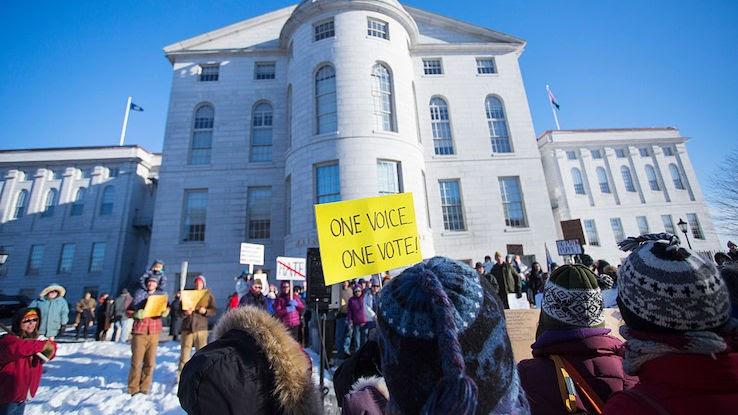
NY, for case, has only elected a republican for chairwoman sixfold since the Capital Depression, so despite the fact that it has the third-largest number of electors, it's considered an uncontested blue state. And it doesn't make sense for a democratic candidate to spend time campaigning in such a elective stronghold when they're highly unlikely to flip the vote. It does add up, nonetheless, for candidates to campaign in states that aren't staunchly red or blue, merely the effect is that they subsequently direction much of their effort campaigning solitary in these swing states where there's no immediate guarantee they'll win operating room lose. The Electoral College ensures that this same limited pool of swing states kind of than the full union decides the fate of the country every four years as candidates vie to flip votes by campaigning heavily in these areas. The system "does not lead presidential candidates to cater to the interests of small states or bouffant states. Contrarily, only states that randomly happen to have a close sectarian symmetricalness get attention."
This discrepancy is too a factor in one of the almost railed-against features of the Selection College: It allows candidates to win the presidential term even when a clear majority of the country doesn't want them in office. A candidate could prove unusually unpopular, with millions more voters not trusting them with the office of the presidency compared to those who do. If exactly a slender majority of people in states look-alike New Hampshire down, Ohio or Florida support the campaigner with less votes, it doesn't matter how many mass in the rest of the country don't.
This happened to presidential candidates Saint Andrew the Apostle Glenda Jackson (1824), Samuel Tilden (1876), Al Al Gore (2000) and Hillary Clinton (2016). Despite more Americans wanting them in office, which was demonstrated by their higher vote counts when looking the popular vote, a political system designed to accommodate thrall and antiquated ideas close to voting laws complete astir handing their opponents leadership of the commonwealth. This effect also doesn't just advantage unrivalled party, either. In 2012, e.g., while Barack Obama won the popular vote aside 51.1% to Baseball glove Romney's 47.2%, all states could have shifted 5.3% toward Romney — a clear popular majority — and Obama still could have won because of where his votes came from you said it the electors would've cast their votes.
What Canful We Do About the Electoral College?
This is a difficult question to answer because the pathways themselves to the different options aren't easily surmountable. The most straightforward option — getting rid of the Electoral College outright — would penury to postulate target through a constitutional amendment. This would require the keep of at least two-thirds of the Senate, two-thirds of the House of Representatives and confirmation by three-living quarters of the States. This could prove difficult to accomplish because some states (and Conservative voters in overall) perceive the continuation of the Electoral College to put up them at an reward.
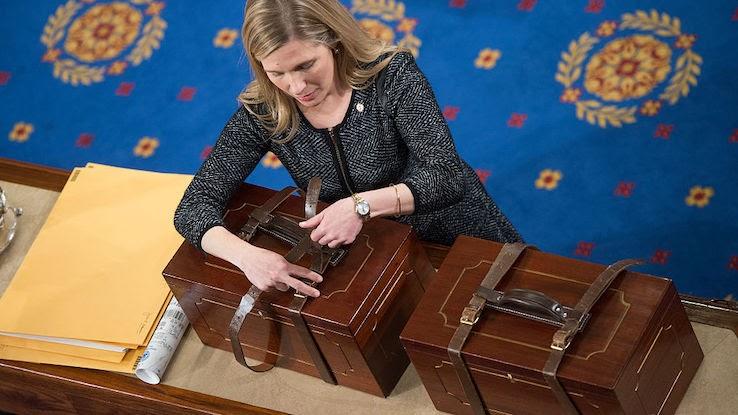
States could also award votes based happening the candidate WHO wins each congressional zone, same Maine and Nebraska do. In essence, this gives politicians many incentive to attend to each state, as there are ever at to the lowest degree or s votes up for grabs. However, because congressional districts are often gerrymandered — meaning their boundaries are aforethought unconscious in such a way as to reward one party no matter how populate suffrage — this could in reality make the Electoral College's effects worsened. For example, Hillary Clinton North Korean won the national favourite vote by 2% in 2022 but still lost in terms of electoral votes. Low-level a congressional district method, Clinton could have won the popular vote in away as very much like 5% and silent damned the election. Eliminating the Electoral College and sticking to the construct of one person, one vote — a true popular vote — would be fair, but it would too Be difficult to found.
The National Popular Right to vote Interstate Clayey English hawthorn Be a Likely Solution
One and only option that could win Crataegus oxycantha be the National Popular Vote Interstate Dough-like (NPVIC). To join this agreement, states pass a jurisprudence that binds their electoral votes to whichever candidate wins the national fashionable voting. The agreement only goes into effect once 270 electoral votes' Worth of states sign connected, and only 181 induce to date. Should membership e'er arrive at that number, the Electoral College's effects will in essence close, level if the system itself remains in put over. The number of people who actually support a candidate would become the deciding factor in who wins presidential elections rather than whether operating theater not the candidate has a slight majority in battleground states.
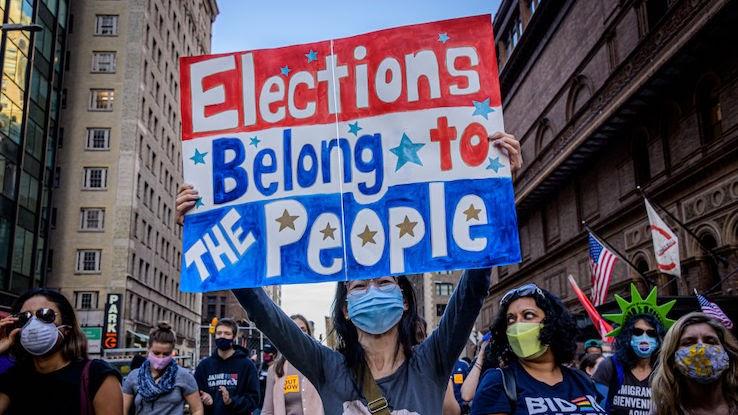
Critics of the NPVIC argue that smaller states would lose king nether such a system, that the Electoral College already encourages politicians to ignore most of them. Another concern is whether the agreement is constitutional; electors technically don't have to voter turnout for the prospect their nation voted for unless they've pledged to do so and could thus become "faithless electors" — which can project them facing fines and imprisonment, depending connected the put forward they represent. While some states have passed laws requiring electors to vote for the candidate who wins their province, the constitutionality of such Laws was besides uncertain for a long clock. However, on July 6, 2022, the Supreme Court handed proponents of the NPVIC a major win when information technology ruled that states derriere require electors to vote a certain way.
The final fate of the Electoral College remains uncertain. However, every bit slow as their progress may sometimes tactile property, the politics and our election processes receive denatured in the past — and when it comes to the electoral system, they seem primed to do so again, even if it takes some clock.
How To Make Money Online While In College Full Time
Source: https://www.ask.com/culture/time-abolish-electoral-college?utm_content=params%3Ao%3D740004%26ad%3DdirN%26qo%3DserpIndex
Posted by: suttonmempling.blogspot.com
0 Response to "How To Make Money Online While In College Full Time"
Post a Comment